A red Subaru Forester heads southwest on the 103 toward Yarmouth, Nova Scotia. The back left tire is worn to the belt. Alexander Gallant takes a drag off a rollie and slides Paul Simon’s Surprise into the CD deck. Neither one of his hands are touching the wheel. I’m in the passenger seat, eyes forward. My temple vibrates against the window. It’s soothing.
“You’re playing at the Th’YARC?” I say. The word feeling like hot soup in my mouth.
“Yeah, tonight.” He keeps his eyes forward. “My manager booked me a bunch of one-on-one meetings after my five-minute-pitch.” I can tell that was hot soup for him, too. We’re speaking in code.
The highway slows and passes through a settlement. It’s serene, unsoiled by progress. The only business here is neighbourly. The larger structures lay flat against the ground from the horrific gale of some ancient hurricane. This place is filthy and forgotten; ruined by time to be driven through and appreciated by people just like us.
Surprise breaks through. We’re listening as the settlement fades behind us. This album, like every other, was marketed. Alex, Paul Simon, and I are bound by the same chains. Nobody is laughing. It’s all quite serious. If the tire explodes two of us are dead.
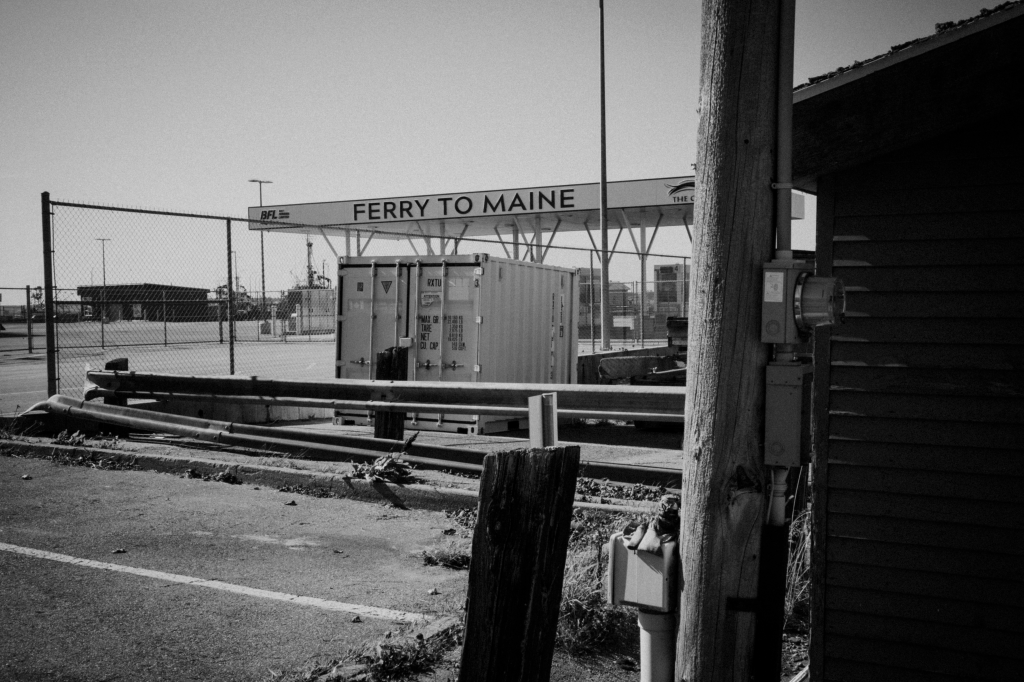
Stephen Harper and Stephen King fucked and made Yarmouth. Pickup trucks and boats pollute the waters and roads. Every machine is huge; they inhale the salty air and cough out black soot. The men are scruffy and wind worn. There’s no women in sight. There’s a memorial with about two thousand names of those lost to sea. Banners on the streetlights sport the black and white faces of fallen World War II soldiers. LeBlancs, Doucettes, Nickersons, Smiths; generations that worked harder than we ever have for things more important than the music business.
Down the hill and over Water Street, hidden beyond all the reminders of depravity and death, the autumn light catches the soaring gulls. They glide across the harbour like shiny pearls on a string.
I wonder who paid for those banners.
We chat with old friends in the lobby of the hotel. In other situations I’d say things that I can’t say here. The older I get, the older I feel. I hear someone say “Spotify” behind me. I notice chains poke out beneath the cuffs of my friend’s shirts. For a moment I let myself feel the strength of friendship and art, then I think of the banners and the gulls and the pursuit of progress; suddenly it’s not all that serious.
Still, we’re surrounded by serious people doing serious things. Well dressed ghosts who only materialize from behind their office walls for the conference circuit. Once every few years, if they can afford it, they’ll holiday in Portugal.
I want to ask these people what they think of Yarmouth. I want to ask them what they think of Spotify. I want to know what songs are on their playlists. I want to ask them why pressing vinyl is a bad sales move. I want to ask them why they don’t recommend playing two shows in the same city on the same weekend. I want to ask them which grant to apply for. I want to ask them how they paid for their clothes. I want to ask them how soon they think music won’t be a valid way to make money. I want to ask them when they think the tire will explode.
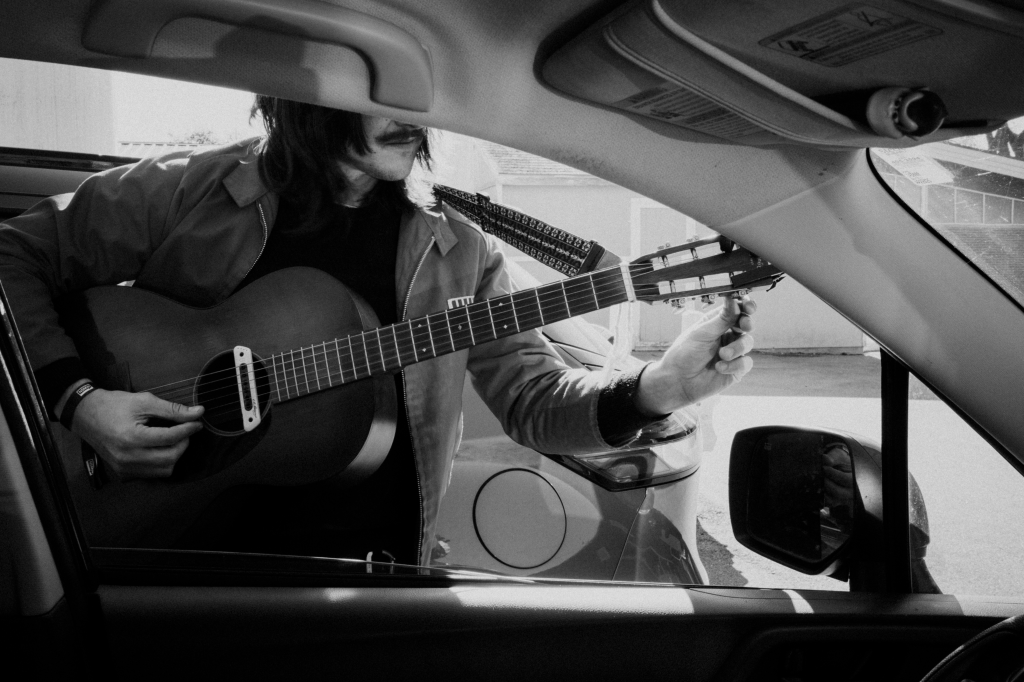
Standing in the parking lot, Alexander Gallant tunes his guitar to an alternative of open C. He plays a few strange chord shapes and brushes his hair behind is ears. It’s warm for late October. Watching from the passenger seat, I can hear him singing through the open window. It melts with the call of a seagull and the hum of a motor. His music is harmonized by seaside towns.
“I’m going in,” he says like he’s about to jump up from the trenches.
I feel my chains start to loosen.
It dawns on me that authenticity is an act of balance.
Written for Junkyard Magazine. Photographs by Eric Stephen Martin.
 Eric Stephen Martin